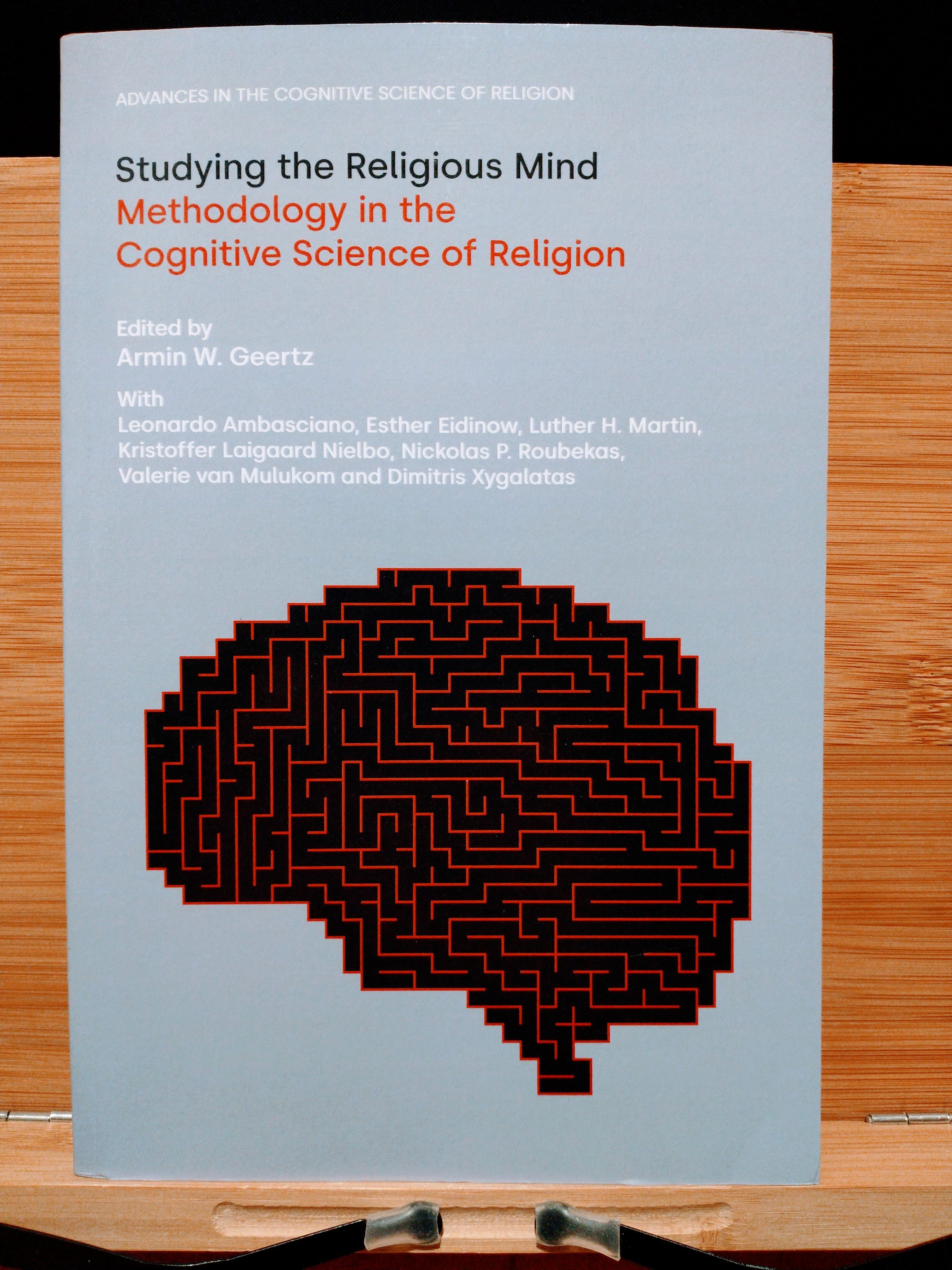
While I am glad to know that in his review of “Studying the Religious Mind” G. D. Alles concurs with me that “post-truth and folk-historical thinking” need to be banished from our field(s), I have to confess my discomfiture for his critical remarks – which I found baffling for a series of reasons that need to be unpacked to be properly understood.
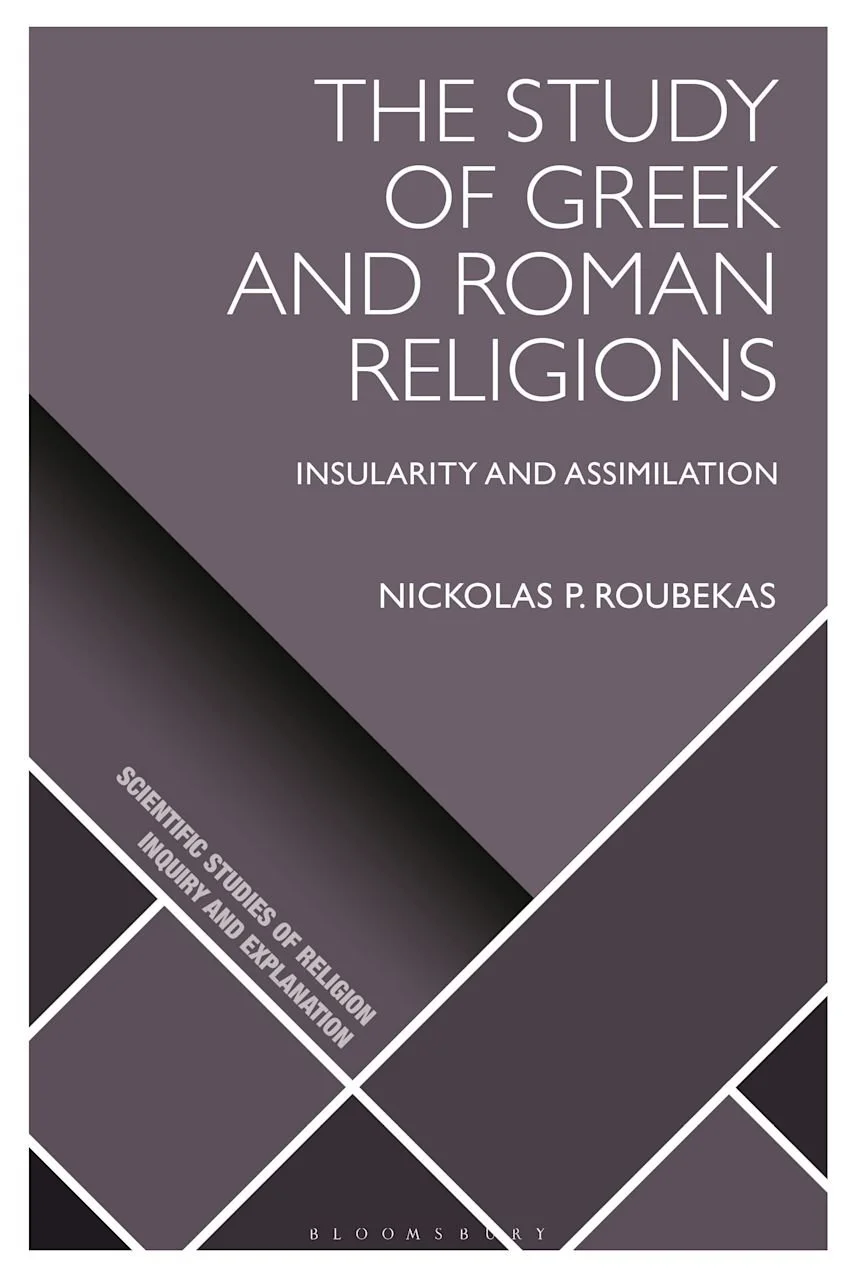
Read moreNickolas Roubekas’ The Study of Greek and Roman Religions clearly shows that the toolboxes and the results of the academic disciplines that study religion(s) from a critical and/or socio-scientific perspective continue by and large to be ignored by classicists, while the modern disciplines that have inherited the scholarly responsibilities of the old Victorian Science of Religion keep on tolerating, if not supporting, a fideistic and (crypto-)theology-friendly status quo.
Read moreI have eagerly waited for a general, comprehensive, and user-friendly introduction to the Cognitive Science of Religion (CSR) for many, many years. Finally, the book I’ve long dreamed about is here. And the result, while impressive in sheer size and scope, leaves much to be desired.
Read moreIntroduction to the Critical and Interdisciplinary Study of Religion 101: A work in progress.
Read moreWe are eminently social primates highly susceptible to power dynamics, individual status, and social hierarchies, to the point that we spend a considerable amount of our time and resources in obtaining prestige goods, following charismatic individuals, and accessing or owning places deemed special, sacred, or relevant by our in-group. If you don’t believe me, just have a look at all the pop items auctioned for jaw-dropping sums of money, from vintage comic books to sport and cinema paraphernalia. In 2003, for instance, comic book artist and creator Todd McFarlane bought baseball player Mark McGwire's 70th home run ball from 1998 for $3 million. Today, Golden Era comic books in good conditions are worth millions of dollars.
Read moreHuman cultures are neural environments extended throughout time and space. Cultures reach out to the ancestors. They explain the origins of everything. Thunders, earthquakes, life, death. They connect the most remote past with the future. And in the process, they provide meaning. Cultures make sense of all that happens. In the skies up above, on earth down below. Within us, between us, among us. Our similarities, our differences, our emotions, our thoughts. Everything is culture, and culture is everything.
Read moreYou know the drill. You went to the movies to watch the latest installment or the much talked about reboot of your favourite horror/thriller series. You read the interviews, you heard the podcasts, you checked some quite promising non-spoiler reviews. This time it really looked like the new movie could be a lot of fun. All you hoped for was a breath of fresh air, and then… meh. Nothing. Been there, done that. Déjà vu. Just more of the same.
Read moreCinema provides a virtual environment specifically engineered to stimulate our cognitive and sensorial inclinations – for our own entertainment. The cinematic experience itself is an embodied simulation based on illusory stimuli able to elicit the mirror neurons of our brains – putting us effortlessly in the characters’ shoes and making us feel what they feel (Gallese and Guerra 2012; Gallese and Guerra 2015). The illusion does not stop at emotionally connecting to the characters’ adventures. We intuitively transform opaque cinematic techniques into flawless narratives (e.g., converting an illogical jump cut into the natural blink of an eye).
Read moreThe response by UK Prime Minister Boris Johnson and his team to the SARS-CoV-2 pandemic has been dismal. On 12 March, I had to endure possibly one of the most cringeworthy political speeches of recent history, when Johnson addressed the nation to tell its citizens that despite the fact that “many more families [were] going to lose loved ones before their time” (meaning the elderly), there was basically nothing to do in terms of prevention (Stewart, Proctor and Siddique 2020). Johnson’s statement was mind-boggling for a variety of reason, the most astounding of which was that the core Tory electorate is currently made up of older people (Inman 2019). You get what you vote for, I guess (Walker 2020), but is a selective culling of the elderly really what elderly Conservative voters voted for during the recent national election?
Read more